

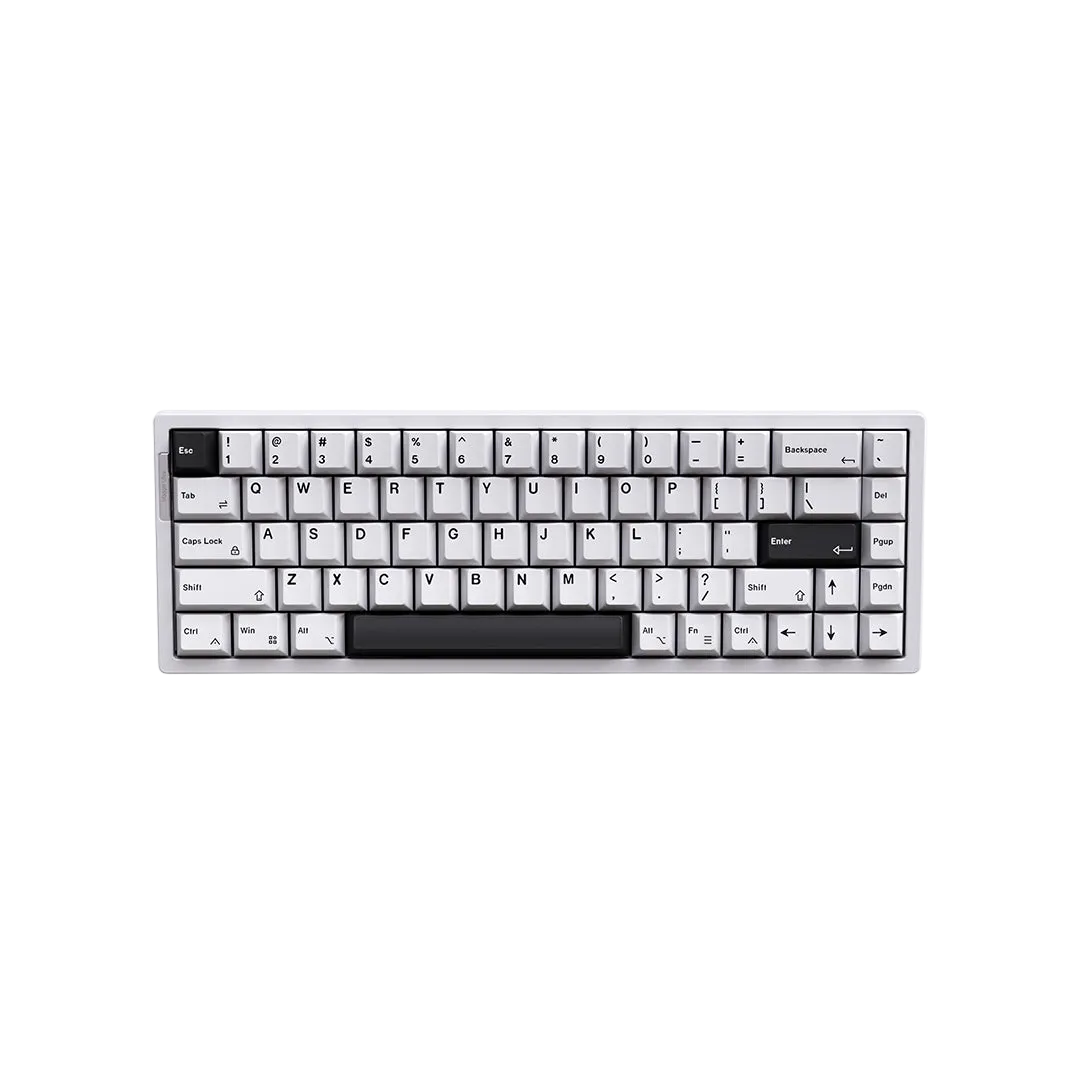
The Truth About 8000Hz Keyboard Polling Rates
For years, 1000Hz was the gold standard for gaming peripherals. It means the device reports its status to the computer 1,000 times per second (once every 1 millisecond). Now, keyboards like the Magger68 HE Ultra are pushing 8000Hz. Is it marketing hype, or does it actually matter?

The Math Behind the Marketing
At 1000Hz, your keyboard has a maximum polling latency of 1.0ms. At 8000Hz, that drops to 0.125ms. On paper, it's 8 times faster.
But humans can't react in 0.125ms. Average human reaction time is around 200ms. So why does the keyboard need to be that fast?
It's Not About Reaction Time. It's About Frame Rendering.
If you are playing CS2 or Valorant on a 240Hz, 360Hz, or 540Hz monitor, your computer is rendering a new frame every 1.8 to 4.1 milliseconds.
If you press a key to stop moving (counter-strafe) so you can shoot accurately, you want that input to be processed in the very next frame your monitor displays.
- With a 1000Hz keyboard, the 1ms polling delay might cause your input to miss the current frame window, delaying your shot until the next frame.
- With an 8000Hz keyboard, the 0.125ms polling delay ensures your input is virtually instantaneous, guaranteeing it makes it into the very next rendered frame.

Who Actually Needs 8000Hz?
If you play on a 60Hz monitor, 8000Hz will not help you. The monitor is too slow to display the advantage.
If you play competitive FPS games on a 240Hz+ monitor, 8000Hz combined with Hall Effect Rapid Trigger is the fastest possible setup you can buy. It removes the hardware bottleneck entirely. If you miss the shot, it's on you.
Share:
Best Custom Mechanical Keyboard for Mac Users in 2026